Parental rights were not just recently challenged and discovered in 2020, but have a long, rich history in the United States. “We do not co-parent with the government,” isn’t just a catchy slogan, but one rooted in court precedent.
Introduction
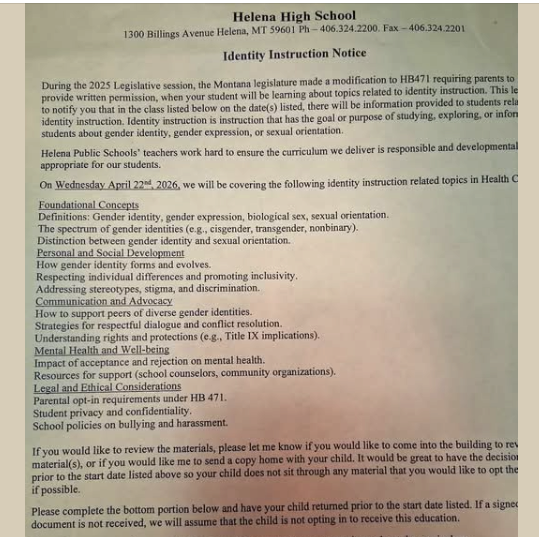
A few weeks ago, an image of a letter from Helena Public Schools notifying parents of an upcoming unit on gender identity instruction circulated on social media. Many folks were upset by the fact that this instruction was happening at a public school right here in Montana. However, as I’ve been watching this kind of activity and helping parents present their disagreements at school board meetings, this notice was a welcome sight. Let me explain.
MONTANA OPT IN & OPT OUT
This notice of instruction was sent out in compliance with the recently passed law (HB471 sponsored by Rep. Jedidiah Hinkle-R), requiring such a notice to be sent and requiring parents to provide written permission for their child to receive instruction in gender identity. This bill revised Montana’s school laws related to human sexuality instruction, increasing curriculum transparency and strengthening parents’ rights to access and review instructional materials. The key features of this bill:
- Requires annual notice before human sexuality instruction
- Allows parents to opt students out of human sexuality instruction
- Requires written parental opt in for identity instruction
- Requires notice between 5 and 14 days before instruction occurs
- Requires schools to provide public access to curriculum materials and summaries
This bill greatly increases parents’ ability to know what is being taught in the public school system on this sensitive subject while requiring greater transparency and communication from schools. Giving parents the opportunity to review materials, prepare for conversations with their children, and make informed decisions about participation reinforces the principle that schools function best when families are treated as active partners in a child’s education and formation.
Opt in policies ensure parents give informed, affirmative consent before children participate in sensitive instruction related to sexuality or identity. Unlike opt out forms that may be overlooked or never make it home, opt in policies, widely preferred by parental rights advocates, require active parental involvement and reinforce the understanding that schools partner with parents, not replace them, in the upbringing and formation of children. Public schools serve families from many different backgrounds and beliefs, which can make questions surrounding identity and morality especially sensitive.
PARENTAL RIGHTS IN MONTANA
While the heated school board meetings about covid protocols, DEI and LGBTQ instruction have simmered down in the last couple of years, this is a good opportunity to refresh what our rights as parents are as they pertain to K-12 education beyond human sexuality instruction. Parental rights were not just recently challenged and discovered in 2020, but have a long, rich history in the United States. “We do not co-parent with the government,” isn’t just a catchy slogan, but one rooted in court precedent. One notable case heard at the Supreme Court in 1925 was Pierce v Society of Sisters. The opinion of the court stated that “the child is not the mere creature of the state,” and that the government cannot monopolize child formation nor force ideological uniformity through public instruction. Courts have consistently affirmed that parents, not the government, possess the primary authority over the upbringing of their children.
Parents have both the fundamental and constitutional right to direct the upbringing and education of their children.
In recent legislative sessions, Montana has taken those longstanding constitutional principles and codified them into some of the strongest parental rights protections in the country, particularly in education, medical decision making, and school transparency.
✔️The Right to Know
- Review curriculum and instructional materials
- Receive advance notice before sexuality or identity instruction
- Access school, counseling, and medical records
- Be informed about assemblies, guest speakers, and instructional events
✔️The Right to Direct
- Choose public, private, religious, or home education
- Direct the moral and religious upbringing of children
- Make medical and mental health decisions for minors
- Opt children out of human sexuality instruction
✔️The Right to Consent
- Schools must receive written parental permission before students participate in identity instruction and may revoke that permission at any time
- Schools generally may not withhold significant information from parents regarding a child’s wellbeing
- Parents must consent before a record of their child’s blood or DNA, biometric scan, or audio/video can be created
CONCLUSION
Taken together, these laws represent a major shift away from the idea that schools or government institutions function as co-parents or possess superior authority over a child’s moral and personal formation.
Whether one agrees or disagrees with the content being taught regarding human sexuality or gender identity, Montana parents should understand that they possess both constitutional and statutory rights regarding the upbringing and education of their children. These laws exist not to create conflict between schools and families, but to ensure transparency, consent, and accountability in matters deeply connected to a child’s moral and personal formation. The recent shift toward opt-in policies for identity instruction reflects a growing recognition that trust between schools and families is strengthened when parents are treated as informed partners rather than passive participants.